
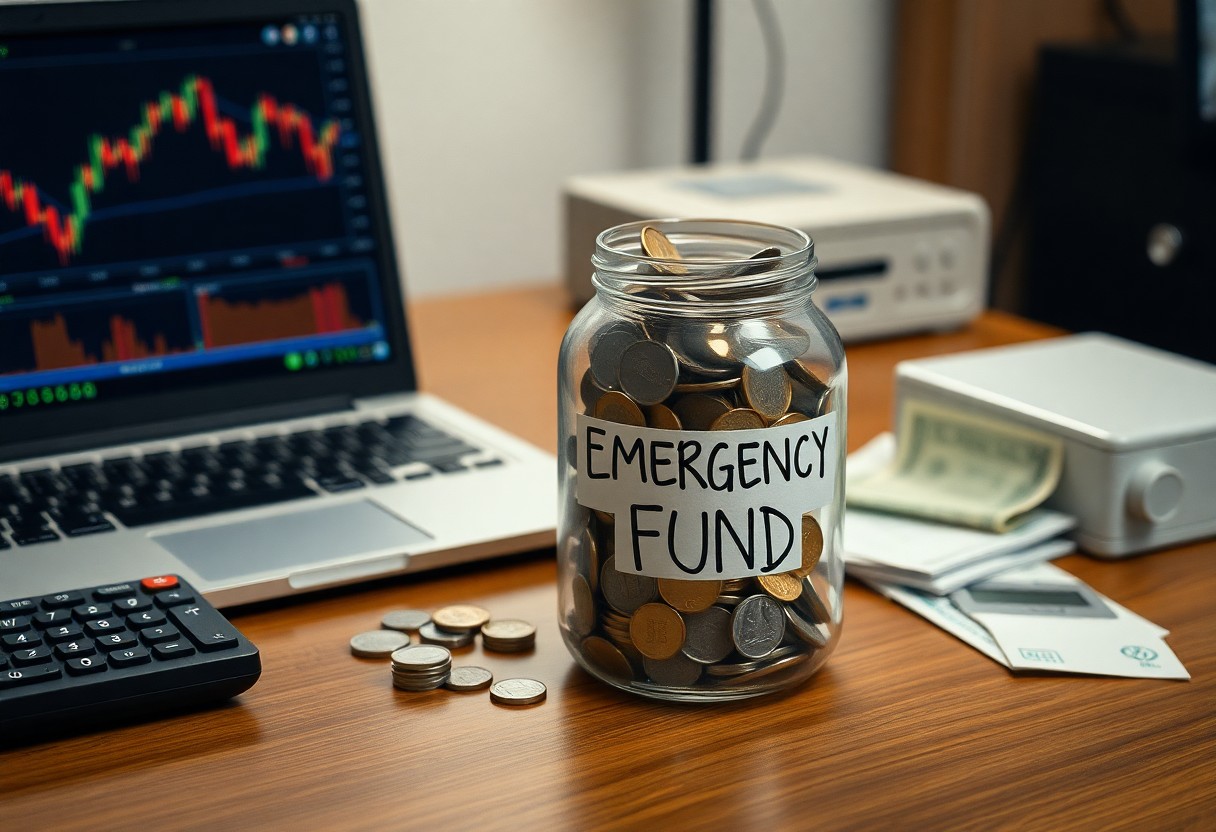
It’s wise to build an emergency fund; you should use this article as a practical and timely resource on the necessity of financial buffers in the current economic climate and consult Emergency savings may hold key to financial well-being for actionable guidance.
Key Takeaways:
- Recommended savings: 3-6 months of necessary expenses; in volatile economies aim for 6-12 months and adjust for job stability and fixed costs.
- Keep funds liquid in a separate, easy-access account (high-yield savings or money market) to avoid penalties and market losses.
- Start small and build consistently: set an initial target ($500-$1,000), automate transfers, and increase contributions when income rises.
- Balance priorities by paying high-interest debt while saving; consider a split allocation (for example, 70% debt repayment, 30% savings) until the emergency fund target is met.
- Use emergency savings only for true emergencies; replenish immediately after withdrawals and reassess the target after major life or income changes.
The Strategic Value of Emergency Savings
You should act because Emergency savings matter because they provide a critical safety net that protects individuals from the unpredictability of a volatile economy. Keep three to six months of necessary expenses to cover rent, food, and bills without selling investments.
Mitigating the impact of sudden income loss
If your income stops, keep three to six months of emergency savings to cover rent, utilities and groceries so you can bridge job gaps without defaulting or selling investments.
Reducing reliance on high-interest credit during crises
Avoid relying on high-interest credit during crises by keeping emergency savings that let you pay urgent bills without resorting to costly loans or credit cards.
Credit lines and payday lenders typically impose steep fees and compounding interest; when you maintain a dedicated emergency fund you can address medical expenses, car repairs, or urgent home fixes immediately, protecting your credit score and preventing debt that can take years to resolve.
Preserving long-term investment portfolios
Keeping emergency savings prevents you from selling long-term investments at a loss during market downturns, so you preserve retirement accounts and the benefits of compound growth.
When markets decline, tapping IRAs or 401(k)s can trigger taxes, penalties, and realized losses; maintaining a cash reserve lets you wait for recovery, keep contributions steady, and protect decades of compounded returns for retirement.
Foundational Steps for Building Reserves
To ensure success, individuals must build their funds step by step, starting with manageable and realistic financial goals. You can consult Key Insights on Income Volatility and Emergency Savings for practical guidance.
Establishing an initial “starter” fund
Begin with a starter fund sized to your means so you meet those manageable and realistic financial goals and gain saving momentum.
Calculating vital monthly living expenses
Calculate your vital monthly living expenses by totaling housing, utilities, food, insurance, and minimum debt payments to create a realistic baseline.
List fixed costs such as rent, mortgage, insurance and loan minima, then average variable vitals-groceries, transport, utilities-over three months using your bank statements; multiply your baseline by three to set an achievable starter target aligned with the step‑by‑step, manageable and realistic financial goals.
Identifying surplus income for allocation
Identify surplus income by comparing your net pay to vital expenses, then earmark consistent amounts from each paycheck toward the reserve.
Track all income and spending monthly, highlight discretionary categories you can trim, and commit to transferring a set dollar amount or percentage each pay period until you reach the next manageable and realistic financial goal.
The Importance of Emergency Funds in a Volatile Economy
Advanced strategies keep the process efficient: The process continues step by step by optimizing savings habits and increasing the velocity of fund accumulation, so you set weekly micro-savings targets and trim recurring expenses to grow reserves faster.
- Automate transfers to enforce consistent saving.
- Use high-yield accounts to balance returns and liquidity.
- Review targets regularly based on economic signals.
Incremental Growth Breakdown
| Strategy | Action |
|---|---|
| Automated transfers | Schedule weekly or biweekly moves to force habit formation and speed accumulation. |
| High-yield accounts | Compare APYs, fees, and transfer limits to keep funds liquid while earning more. |
Implementing automated transfer systems
Automated systems ensure steady contributions: you schedule weekly or biweekly transfers to force discipline, aligning with the process continues step by step by optimizing savings habits and increasing the velocity of fund accumulation.
Utilizing high-yield accounts for maximum liquidity
High-yield accounts put your emergency cash to work while keeping it accessible; you compare APYs, transfer limits, and fees to increase the velocity of fund accumulation without sacrificing liquidity.
You can prioritize FDIC-insured online savings or money market accounts with same-day or next-day transfers, link a checking account for instant access, and monitor APY changes monthly so the process continues step by step by optimizing savings habits and increasing the velocity of fund accumulation.
Re-evaluating savings targets based on economic shifts
Adjust targets quarterly to reflect market shifts; you change contribution percentages, target three- to six-month expense coverage, and keep the process moving by optimizing savings habits and increasing the velocity of fund accumulation.
Monitor CPI, unemployment, and Federal Reserve rate decisions to decide when to raise or pause contributions; you model downside scenarios, adjust the split between liquid accounts and short-term instruments, and document each step so the process continues step by step by optimizing savings habits and increasing the velocity of fund accumulation.
To wrap up
From above you must heed final words on the enduring importance of maintaining liquid reserves to achieve long-term financial stability and peace of mind; keep accessible cash and consult An important guide to building an emergency fund for practical steps.
FAQ
Q: What is an emergency fund and why is it important in a volatile economy?
A: An emergency fund is a cash reserve dedicated to unexpected expenses such as job loss, medical bills, or urgent home and car repairs. It protects day-to-day finances when income drops or costs spike during economic swings, preventing high-interest debt or forced asset sales. Having accessible savings reduces stress and gives time to make thoughtful financial decisions instead of rushed choices under pressure.
Q: How much should I aim to save given current economic volatility?
A: A common starting target is three months of necessary living expenses, with six months recommended for most households. Single-income families, self-employed people, or those in cyclical industries should aim for six to twelve months. Calculate necessary expenses by totaling rent/mortgage, utilities, groceries, insurance, minimum debt payments, and necessary transport. Multiply that monthly total by your target number of months to set a specific dollar goal.
Q: Where should I keep my emergency fund so it stays safe but accessible?
A: Place the fund in low-risk, liquid accounts that offer some interest, such as high-yield savings accounts, money market accounts, or short-term Treasury bills. Use FDIC- or NCUA-insured accounts for protection up to limits. Avoid investing emergency cash in the stock market due to short-term volatility. Consider a small CD ladder or Treasury bill ladder to earn higher returns while keeping portions accessible on a rolling schedule.
Q: What step-by-step plan can I use to build an emergency fund on a tight budget?
A: Start by setting a realistic short-term goal, for example $1,000, to cover immediate small shocks. Automate a modest monthly transfer from checking to your savings account to make saving consistent. Create a basic budget that prioritizes necessarys, then trim nonnecessary subscriptions and discretionary spending. Boost contributions with side income, overtime, or selling unused items. Apply windfalls like tax refunds or bonuses directly to the fund until you reach your full target.
Q: When is it appropriate to use the emergency fund and how should I replenish it afterward?
A: Use the fund for true emergencies that affect your ability to meet basic needs, such as unexpected medical costs, sudden loss of income, or urgent home repairs that prevent further damage. Avoid dipping into the fund for planned expenses or discretionary purchases. After a withdrawal, rebuild the fund by returning to automated transfers and temporarily increasing savings amounts until you restore your target. If frequent withdrawals occur, reassess your budget, insurance coverage, or income stability to reduce future reliance on savings.