
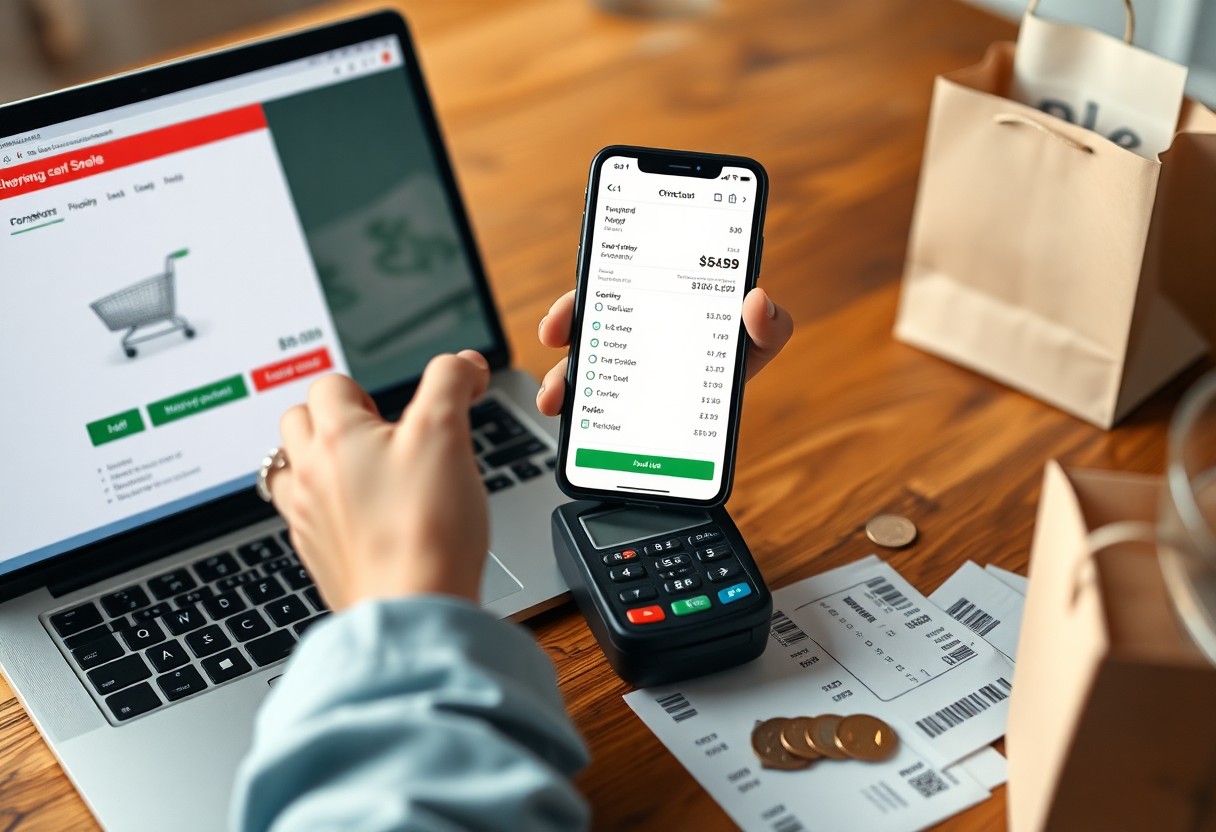
Spending in apps, subscriptions, social media, and online shopping changes how you decide, with recurring fees, impulse purchases, targeted ads, and subscription models steering your consumer behavior and financial choices.
Key Takeaways:
- Design features in apps and online stores (one‑click checkout, saved payment methods, push notifications, flash sales) reduce friction and prompt impulsive purchases through variable reward cycles.
- Subscription models create spending inertia: recurring billing, free trials that auto‑convert, and opt‑out friction lead to passive monthly costs and subscription creep.
- Social media and influencer content amplify social proof and FOMO, using curated lifestyles and targeted ads to normalize higher spending and shift perceived needs.
- Behavioral targeting and personalization use user data to time offers, frame choices, and present tailored nudges that increase conversion and reduce price resistance.
- Small digital transactions and hidden fees accumulate; regular subscription audits, budgeting tools, notification controls, and deliberate purchase delays help limit overspending.
The Behavioral Impact of Mobile Applications
Apps are designed to influence consumer behavior and financial decisions through constant engagement and gamified interfaces, so you often spend more; see The Silent Wallet: How Payment Mode Transparency …
Dopamine Loops and User Retention
You encounter reward loops as apps use gamified interfaces and constant engagement to shape choices, increasing session length and raising the likelihood of in-app purchases.
Push Notifications as Spending Triggers
Mobile push alerts interrupt your routine, prompting quick taps and often impulsive transactions when apps pair nudges with time-limited gamified offers.
Push notifications use timing, personalization, and limited-time rewards to convert your attention into spending; apps are designed to influence consumer behavior and financial decisions through constant engagement and gamified interfaces, so you react faster to flash deals, reminders, and progress updates that nudge purchases.
The Psychology of Subscription-Based Models
Subscription services influence consumer behavior and long-term financial decisions through recurring billing and automated renewals. You often tolerate small monthly charges that compound into sizeable annual costs, so passive renewals become a steady drain on your budget unless you actively cancel.
Default Bias and the “Set and Forget” Mentality
Default options exploit your inertia; recurring billing and automated renewals make you less likely to cancel, so you keep services by default and overlook cumulative costs across months and years.
The Sunk Cost Fallacy in Digital Access
Sunk costs from past subscriptions push you to continue access; recurring billing and automated renewals hide the true ongoing cost, prompting you to use services longer to justify prior payments.
You often justify continued subscriptions because Subscription services influence consumer behavior and long-term financial decisions through recurring billing and automated renewals. That mental accounting converts months of small charges into a perceived investment, so cancelling feels like admitting a loss and you delay cutting services even when they no longer serve your needs.
Social Media and Peer-Driven Consumption
Social media platforms influence consumer behavior and financial decisions via social proof and targeted algorithmic advertising. You encounter curated feeds and algorithmic ads that nudge purchases; learn more at Spending Psychology in the Digital Age | Finschool By …
Influencer Marketing and Trust Dynamics
Influencer endorsements amplify social proof, so you often trust purchases after repeated exposure while algorithmic advertising reinforces those choices across feeds, increasing impulse buys and altering your financial decisions.
The FOMO Effect and Trend-Based Spending
FOMO drives you to match peers’ purchases when algorithms surface trending items, and targeted ads intensify urgency, shaping your short-term spending and financial choices.
You notice FOMO when social proof shows peers buying limited drops and algorithmic advertising pushes those listings repeatedly; that combined pressure alters your budgeting, raises impulse spending, and shifts financial decisions toward short-lived trends.

The Convenience of Online Shopping Environments
Interfaces: Online shopping interfaces influence consumer behavior and financial decisions by reducing transaction friction and payment pain, so you face fewer hurdles and often spend more within apps and sites.
One-Click Purchasing and Digital Wallets
Checkout buttons and saved wallets let you buy with a tap, reducing payment pain so you complete purchases faster; read more at Digital Wallets & The Psychology Of Spending In A …
Choice Overload and Decision Fatigue
Excess choice overwhelms you, raising decision fatigue so you either pick quickly and buy more or abandon carts to avoid mental effort.
Studies show Online shopping interfaces influence consumer behavior and financial decisions by reducing transaction friction and payment pain; when that reduction meets abundant options you rely on simple heuristics like popularity and default choices, which increases impulse buys and deepens cognitive fatigue during even short shopping sessions.
Final Words
Taking this into account, you must assess how apps, subscriptions, social media, and online shopping shape your spending and financial choices through recurring fees and targeted ads that prompt impulse purchases.
FAQ
Q: How do apps and subscription models change consumer spending behavior?
A: Apps and subscription models convert large one-time purchases into small recurring charges that feel less painful, which increases long-term spending. Auto-renewal, saved payment details, and trial-to-paid transitions exploit inertia and present-biased preferences, causing many users to overlook or forget subscriptions. Pricing tactics such as tiered plans, bundles, and free trials use anchoring and the decoy effect to make higher-priced options appear more attractive. Monthly billing masks the cumulative cost, altering mental accounting and making ongoing spending more acceptable.
Q: In what ways does social media drive impulsive buying and altered financial choices?
A: Social media amplifies social proof, scarcity cues, and influencer endorsements, which trigger emotional and instantaneous purchase decisions. Algorithms prioritize content that elicits strong reactions, increasing exposure to aspirational lifestyles and targeted product suggestions that create feelings of FOMO. User-generated reviews and visible engagement metrics lower perceived risk and speed up conversion, while curated feeds and shoppable posts shorten the path from discovery to checkout. Constant comparison to peers can increase desire for status goods and prompt unplanned spending.
Q: What design techniques in online shopping increase conversion and encourage overspending?
A: E-commerce sites use techniques such as one-click checkout, default opt-ins, and saved payment methods to reduce friction and speed purchases. Urgency signals like countdown timers, limited-stock messages, and flash sales exploit scarcity and loss aversion to push immediate action. Price framing, anchors, and decoy options guide shoppers toward higher-margin choices, while personalized recommendations and cross-sells increase basket size. Subtle dark patterns, including disguised fees or hard-to-find cancellation paths, can keep customers enrolled longer than they intended.
Q: How does personalization and targeted advertising influence financial decision-making?
A: Personalization tailors offers to individual preferences, purchase history, and behavioral signals, increasing relevance and conversion rates. Dynamic pricing and customized promotions can lead to price discrimination and variable perceived value across users. Emotional targeting uses past behavior to present time-sensitive or aspirational messages that bypass deliberative decision-making. Data-driven ad placement reduces search costs but can also narrow exposure to alternatives, reinforcing existing spending habits and making price comparison less likely.
Q: What practical strategies help consumers regain control over digital spending?
A: Perform a monthly subscription audit to list recurring charges and cancel unused services; use bank or card tools that categorize subscriptions to simplify the review. Set spending limits and budgeting rules inside finance apps or with separate cards dedicated to discretionary purchases. Disable nonimportant push notifications and remove saved payment methods from shopping apps to introduce friction before buying. Implement a cooling-off rule such as waiting 24-72 hours before high-value purchases and use price-tracking extensions to avoid impulse deals. Consider prepaid cards, virtual cards, or account alerts to enforce limits and prevent surprise renewals.